
Illinois Busted Mugshots
A booking photo gets taken at intake, right after an arrest. The county jail or arresting agency keeps it. Illinois has no central gallery for these images. Each sheriff runs its own roster. Some pair a photo with a custody status. Others list nothing but names and charges. A few counties post no roster at all. Just because a photo is not online does not mean the record is missing.
An arrest entry is only one moment in a case. Charges can drop, and courts can dismiss. The Illinois Department of Corrections, or IDOC, runs a separate offender search with its own identification photos. Those pictures belong to state custody, not county booking. Two systems, two stages, two records.
Illinois Mugshot Access Law
Illinois treats arrest details as records you can request. The rule sits at 5 ILCS 140/2.15. A criminal justice agency gets 72 hours after an arrest to hand over the defined material. Names, ages, and addresses are on the list. Photographs count too, when available. Charges, arrest times, places, and the arresting agency's name come with them. Custody records add receipt, discharge, and transfer times. No rule here forces a website or a permanent feed of images.
The statute allows withholding for pending cases, safety, and jail security. Juvenile records stay sealed. Subsection (e) also curbs social-media posts of booking photos in certain lower-level cases, with exceptions for fugitives and missing persons. That is a limit, not a full ban. A separate law, section 2QQQ, targets publishers who charge to remove or fix covered criminal-record material.
Section 2QQQ lays out a real correction process. Send a notice with support, and a covered publisher generally has five business days to fix the error. The statute spells out remedies when nothing happens, and it names who is exempt. News media, consumer-reporting agencies, and interactive services sit outside the deadline.
Does the law make every accurate booking page come down? No. It targets payment demands for covered requests, nothing more.
Open Illinois arrest-information law, section 2.15.
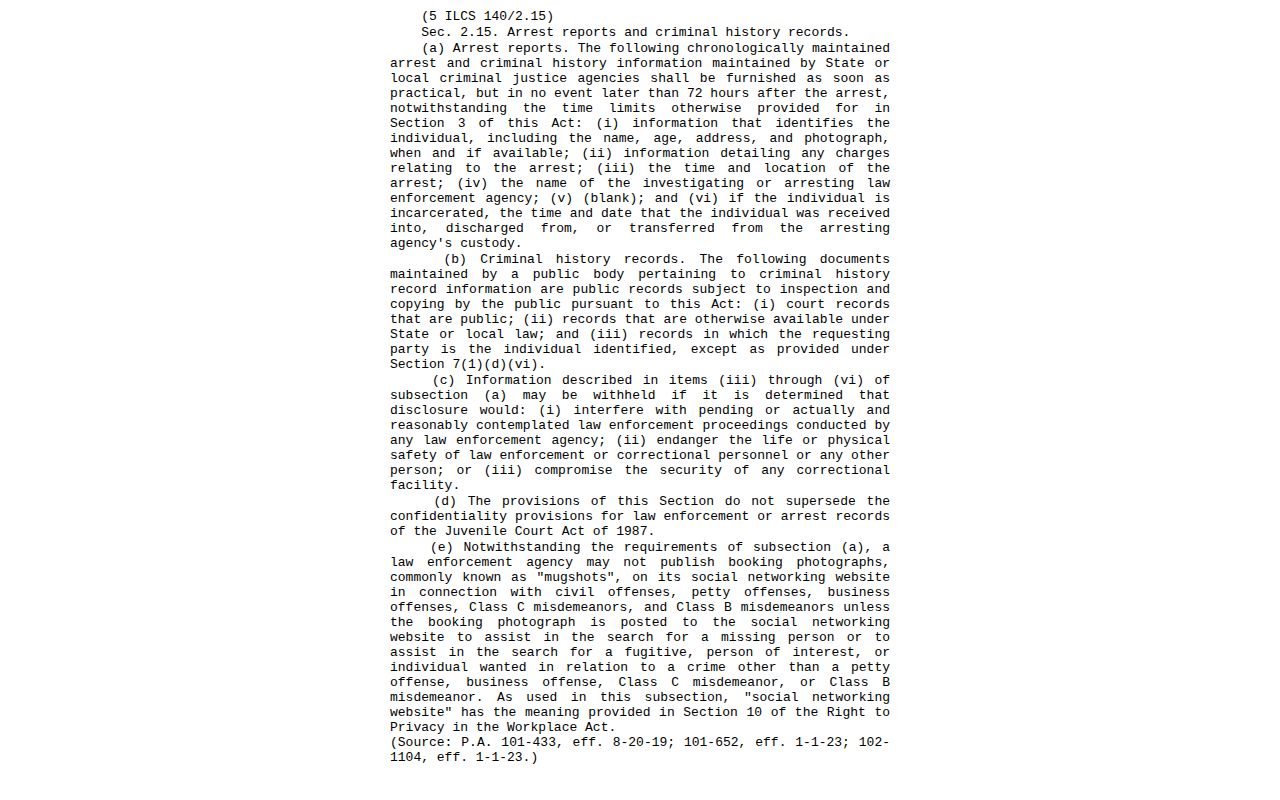
The statute splits record access from website posting. Read Illinois section 2QQQ on free correction and removal requests.
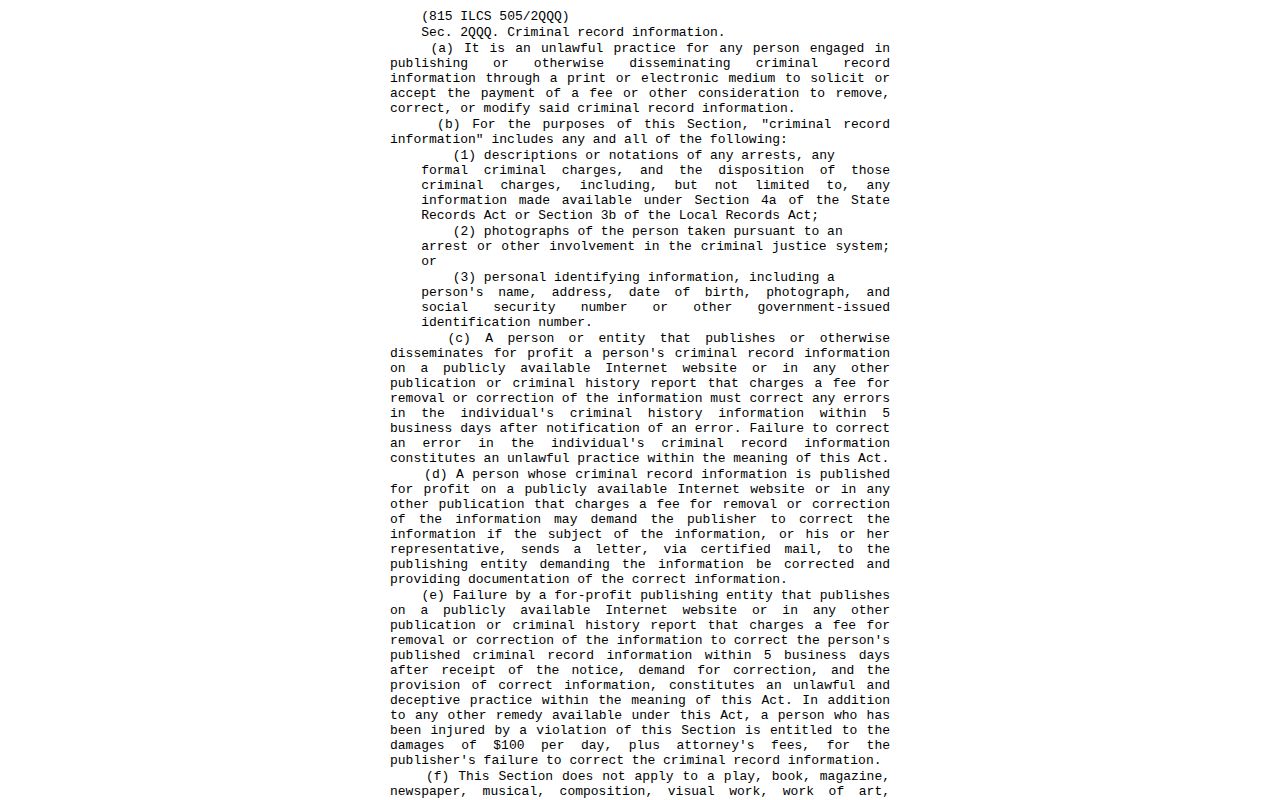
The section includes a documented correction path and limits on where that rule applies.
Note: A public-record rule can require access to a custodian’s record without requiring that record to stay on a public roster.
Illinois Booking Record Fields
Section 2.15 sets the floor for what an agency must hand over. The actual portal can add or drop fields. A web result is never the whole case file. Chicago Police offer one example. The CPD arrest search lists a central booking number, charges, arrest time and place, release, bond, and district. It covers city arrests only. Sheriff, state police, and suburban bookings live elsewhere.
| Record field | What it can show |
|---|---|
| Name and age | Identity details recorded by the arresting or holding agency; confirm a match with more than a name. |
| Address | Address recorded at the time of arrest, subject to privacy and safety limits. |
| Photograph | A booking photo when and if available; not proof of identity or guilt. |
| Charges | Charges listed at arrest or booking; they can later change. |
| Time, place, agency | When and where the arrest occurred and which agency investigated or made it. |
| Custody events | Receipt, discharge, or transfer times for a person held in custody. |
| Local portal details | Some systems add booking number, bond, court date, unit, or release information. |
| IDOC profile | IDOC number, status, institution, sentence data, physical descriptors, dates, and front/profile images. |
- Booking
- The intake process after an agency brings an arrested person into custody.
- Arraignment
- A court proceeding where charges are presented and the case begins moving through court.
- Bond
- A court-set condition or amount tied to release; local portals may use this label differently.
- Disposition
- The court’s recorded outcome or current status of a charge or case.
- Expungement
- A court remedy that can require eligible records to be removed from official indexes or destroyed.
IDOC fields describe prison, not county booking. Vendors for local jails label things their own way. When a field is blank, ask the custodian if it exists in the underlying record and can be shared. What if the name does not appear? Check the spelling, dates, and custody status first. Then contact the arresting or holding agency, since a blank result proves nothing.
Illinois Booking Record Requests
Sometimes the roster will not answer your question. Put the request in writing instead. Illinois FOIA is the tool. Send it to the office that actually holds the record: the arresting police, the sheriff or jail, IDOC, or another public body. Keep the 72-hour rule and the normal FOIA track separate, because one office cannot hand out another agency's files.
- Identify the person and give an approximate arrest date, county, and arresting or booking agency. Add a case or booking number if known.
- Name each record requested: arrest report, booking sheet, photo if disclosable, charge information, release or transfer record, or current disposition.
- For a county record, use the County Directory to reach the relevant county site and follow its official sheriff or police records link. Ask that agency for its FOIA officer and current process.
- For state-prison records, use IDOC’s official FOIA page. Its current instructions describe the request method, response framework, and any copy fees.
- Keep the reply and compare it with the court docket. If the record is denied or redacted, ask the office to identify the legal basis and appeal route.
IDOC posts its FOIA rules on one page. Request methods and copy fees are spelled out. The clock runs five working days, and extensions are possible. The first 50 black-and-white pages are free, while color and other media can cost more. View IDOC's current FOIA request instructions.
Illinois Sealing and Expungement
Expungement and sealing are different court remedies. Expungement can require eligible records to be destroyed or returned and names removed from official indexes. Sealing limits public access while preserving access for some authorized uses. Eligibility depends on the case result, offense, sentence, waiting period, and other records, so a charge label alone is not enough. Check the current statewide forms or ask a circuit clerk or attorney about an individual case.
Arrests without charges, dismissals, acquittals, and convictions later reversed or vacated can be expungement paths, subject to exceptions. Many supervision records may qualify after a two-year wait; some convictions may qualify for sealing after three years. Offense-specific rules limit those examples, and many convictions cannot be expunged. Juvenile records follow a separate process.
After an order, check that each agency received notice and changed its own record. A court order will not automatically update a jail roster, news story, or third-party copy. Use the source’s free correction route for a stale page; a search-engine refresh changes the search result only.
See the official statewide forms and filing instructions.
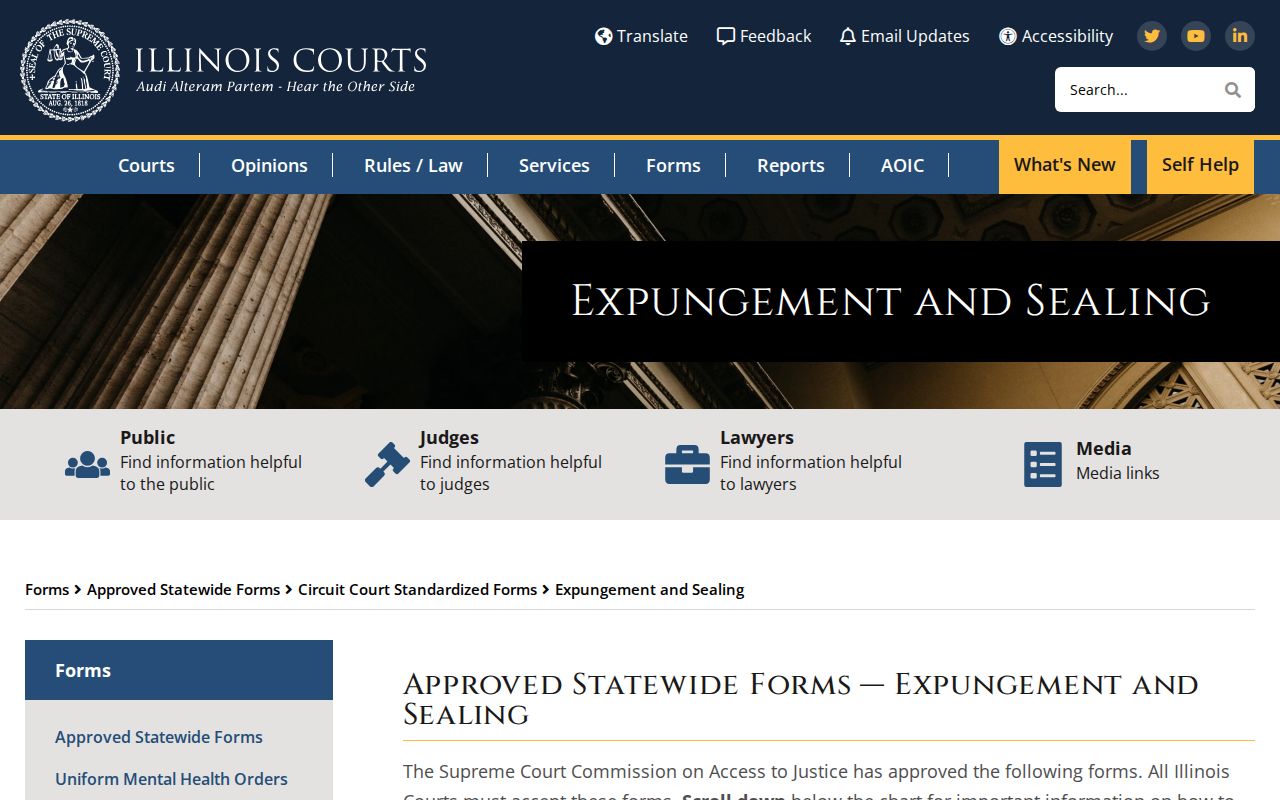
The court page supplies the petition forms and filing directions. Whether a person qualifies is decided case by case, not on that page.
Illinois Old Mugshot Records
An old Illinois arrest can hide in several places. A jail register, a court file, a prison record, or an archive photograph may each hold a piece. The Illinois State Archives and its IRAD program are the natural starting points for county holdings. Sheriff registers can list names, ages, offenses, and releases. Many are text only. A catalog entry never proves a photograph survived.
Search by county and likely date, then ask the depository whether the record includes a photo and whether a scan or a visit is possible. Federal files may sit at National Archives at Chicago. No Illinois rule sets a statewide photo-retention period. IDOC keeps some images internally after release, but its search does not publish photos of former individuals. Ask the custodian whether an image was kept, moved, restricted, or destroyed.
Note: Archived text can outlive a live page, but an arrest entry does not prove a photograph was kept with it.
Find Illinois Busted Mugshots
Start with the person's full name plus a detail like an approximate date or county. Decide first who holds the person now. A fresh arrest may surface in an agency log or a county jail roster, while someone already released can drop off the live roster even though the booking record still exists on file. A state sentence points to IDOC's search. Confirm identity and outcome through official sources.
- Identify where the arrest happened, and whether a city police department, sheriff, or state agency made it.
- Check the relevant county’s official roster or booking feed for a current custody entry. Do not assume every county posts a photo.
- If the person is not in county custody, check the official IDOC search for a state-prison profile, or use the federal locator for federal custody.
- Use the Illinois Courts county map to find the circuit clerk and check the docket for the filed charge and later disposition.
- If a public search fails, ask the agency that created or holds the record for the correct request route.
Names can match more than one person. Compare dates and agency identifiers, since a public search may be stale or limited to one agency.
Illinois Busted County Booking Differences
Illinois has 102 counties and no shared booking portal. Local systems fall into a few patterns. Some post a current-custody search, some a daily population sheet, some a selected arrest log, and some no public roster at all. The arresting agency may keep the record while another county holds the person and runs the live custody entry. Search both.
Will County shows how far a local portal can go, with name, subject, booking-number, custody-status, booking-date, and unit searches plus a Photo column. That feature list belongs to Will County alone. Other counties may offer less. The official Will County inquiry shows what a photo-capable local search looks like.
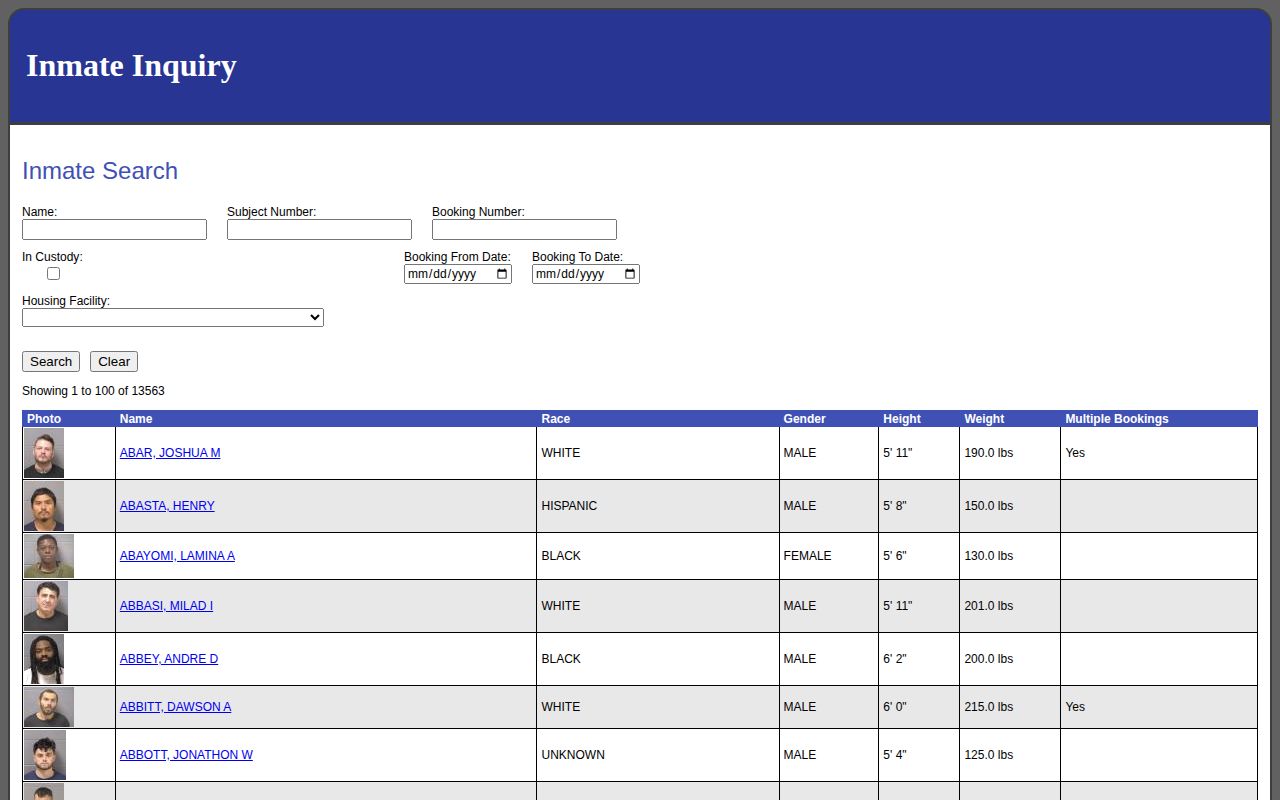
A photo field is a local feature. No Illinois-wide publication standard exists for booking pictures. Pick the county that made the arrest or the county now holding the person. The Illinois County Directory routes to each county's site, and the record custodian can say whether a record exists when no portal result appears.
Illinois Busted State-Prison Photos
IDOC's search covers people in state custody, not every recent city or county arrest. Lookups run by last name, IDOC number, or birthdate. A profile can include status, institution, dates, descriptors, sentence details, county, offense, and front and profile photos. Match the agency number plus a second detail. IDOC warns that data can change and the system goes down for maintenance at times.
Current custody photos appear. Photos of former individuals stay confidential, even though the agency keeps images internally after release or discharge. Open the official IDOC name and number search.
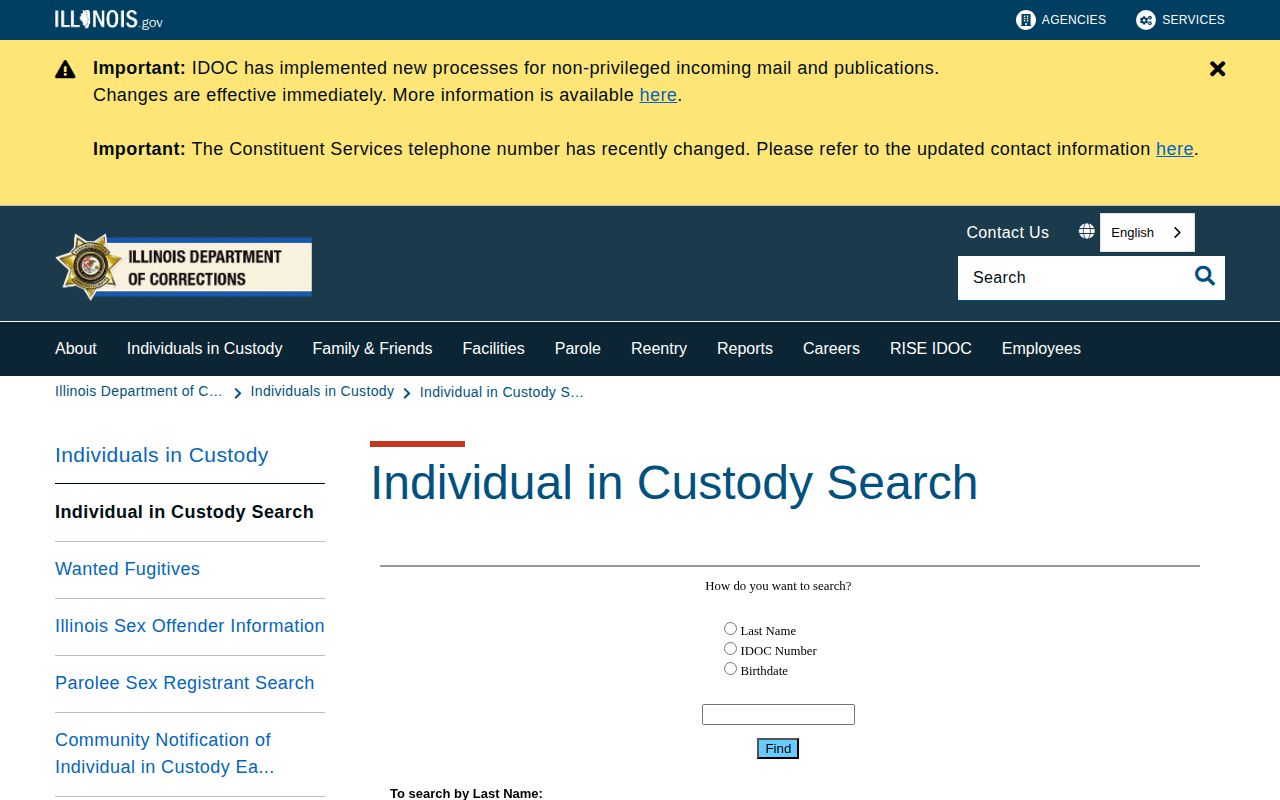
The screen is a search form, not a wall of faces. The lookup stays on the state agency's own site. County booking photos document a different stage entirely. They may appear on a jail roster under local policy, while an IDOC profile reflects state custody and sentence records.
Illinois Warrant Checks
A wanted list is not a warrant roster. Neither one means a new booking. Illinois offers no single statewide warrant screen open to the public, so start local. The county court or clerk, along with the agency that issued or serves the warrant, has the real answer. Ask those offices how to confirm a match and resolve it safely, and turn to a lawyer or the court when the situation is unclear. Never confront anyone. An arrest is never a job for private citizens. Each list also has its own scope. IDOC's entries cover correctional fugitives and absconders, Illinois State Police fields non-emergency tips, and the U.S. Marshals pursue federal fugitives. Call 911 about an immediate threat, and send other tips through an official route. The Illinois Most Wanted page details the official list and safe tip routes.
Illinois Busted Record Stages
Custody stage decides the right source. County rosters track current holds, while a released person's booking record stays with the arresting agency. State sentences show up in IDOC's system, so a blank result in one place never means no arrest happened.
| Stage | Where to look | What a photo result means |
|---|---|---|
| New arrest | Arresting agency log or booking office | A photo may not be ready or posted yet; the arrest is an charge. |
| In county custody | Holding jail’s official roster or inquiry | Photo access depends on that county’s fields and publication policy. |
| Released or transferred | Records unit, arrest report, booking record, or transfer record | The person may drop off a current roster while the custodian retains the record. |
| State sentence | IDOC Individual in Custody Search | The profile photo is an IDOC identification image for state custody. |
| Federal or immigration detention | BOP or ICE locator, as applicable | These locators do not provide a public mugshot gallery. |
People move between systems and counties. Check the date and agency on each entry, then use the court record for the case outcome.
Illinois Busted Roster Patterns
County jail sites vary widely. One county's custody portal shows a photo field. Another posts a daily sheet as a single population snapshot, or shares an arrest log and press releases covering selected events. Some counties list no online roster at all, and none of these patterns amounts to a state rule or ranking.
| Local surface | Research example | Limit to keep in mind |
|---|---|---|
| Searchable custody portal | Will County’s inquiry; Kendall and other counties use their own vendor systems. | A photo column or historical tab does not establish statewide access or a fixed retention period. |
| Daily population sheet | Adams County’s sheet includes a “Front Mugshot” field and is updated around 6:00 a.m. | A daily sheet is not a complete, all-time arrest archive. |
| Selected log or report | Winnebago County research documents Rockford’s seven-day arrest log and 72-hour dispatch information. | Dispatch calls and selected reports are not the same as jail bookings. |
| No verified online roster | Alexander, Brown, Bureau, and other counties direct readers to a phone, app, neighboring jail, or records unit. | Absence of a public search does not prove that the custodian has no record. |
Population centers lean toward structured portals. Rural counties often rely on a PDF, a phone call, an app, a selected report, or a direct request. Cross-county jail placement adds a wrinkle. Alexander records can point to Pulaski detention, Brown records to Schuyler, and the arresting agency, court, jail, and photo custodian may each be different offices.
Illinois Busted Booking Feeds
Illinois counties refresh their jail pages on their own schedules. There is no common feed. Adams County posts a daily population snapshot. Woodford County's portal offers a "Books 24hr" view. Those windows describe the web display only, not record or photo retention. The separate 72-hour state access rule is a furnishing deadline, not a refresh clock.
Timing still trips people up. Weekend arrests, transfers, court releases, and vendor refreshes all delay when a name appears. Some counties publish text reports without photos. Others list no online roster and take requests instead. Check the date, filter, spelling, and neighboring jails first. A blank search is not proof of no record.
Some sheriff apps carry only news, tips, or alerts. Illinois VINE sends custody-change alerts to registered users, but it is not a public photo list; learn about the Illinois Attorney General's VINE notification system.
Note: An alert can tell a registered user about a custody change without showing the booking record or photograph.
Illinois Arrest Court Records
No single public site searches every Illinois county docket and case type. That gap shapes everything here. The Illinois Courts county map identifies the circuit court and clerk for any county. Local habits still vary. Some courts run separate search systems, and a result may omit records or demand a date or case number. Others cover only participating counties.
A docket, not a jail roster, tracks later court events. So read it closely. Look for the filed complaint or indictment, plus docket entries and a plea or trial result. Check for dismissal, sentence, appeal, and any sealing or expungement order. Later review can change an earlier result. Always read the newest court order.
Cook County runs its own clerk search. Other counties may link straight to local portals. Is the online docket unclear or incomplete? Contact the circuit clerk for the official file. Keep the booking date and arrest agency separate from the court venue. Arrest county and trial county can differ, so track each piece on its own. Open the official Illinois court and county-clerk directory to find the right office fast.
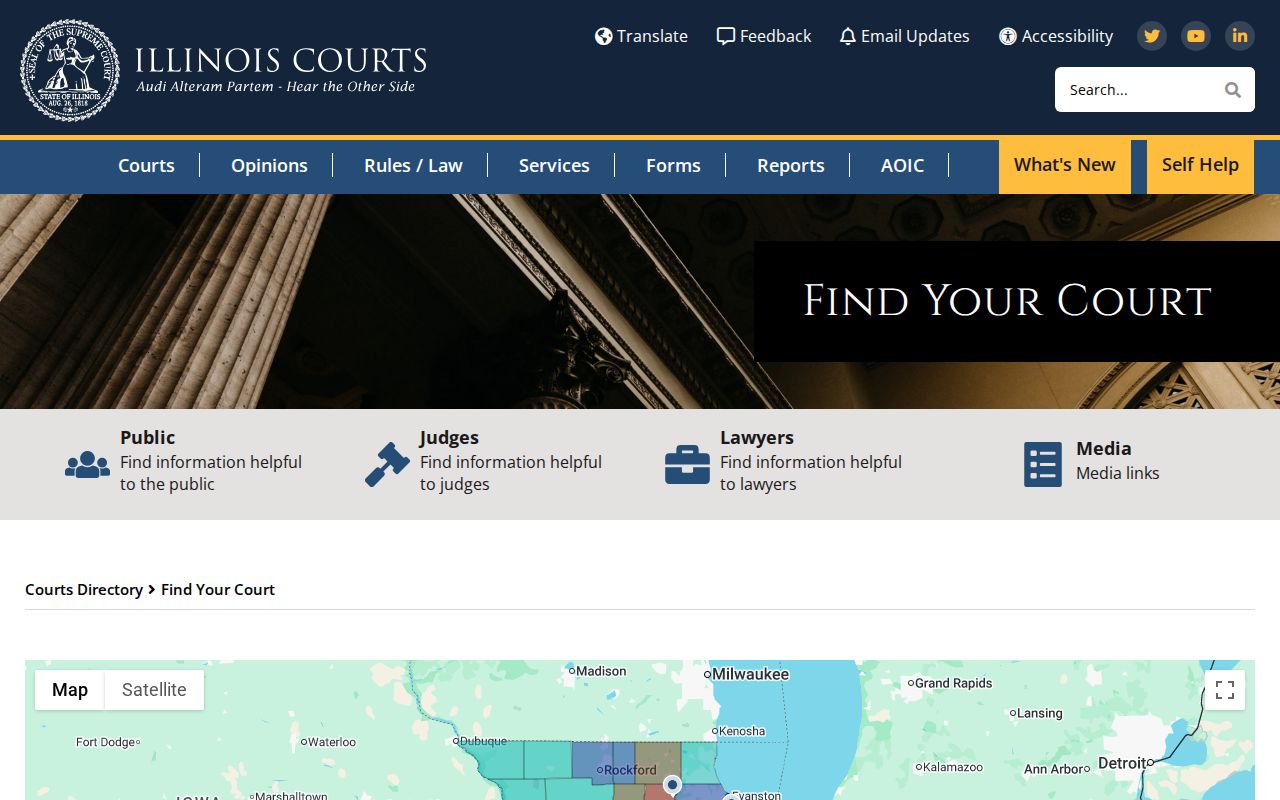
The court map is a route, not a result. It points you to the right clerk rather than to a statewide mugshot or complete case search.
Note: A clerk search can begin after an arrest and may list a different venue from the jail that held the person.
Illinois Federal Custody Searches
A federal arrest in Illinois goes down a different road. It can lead to a federal complaint, indictment, detention hearing, or court docket. A county booking entry rarely figures in. The Federal Bureau of Prisons locator finds people in federal prison by name or register number. It reports custody only. There is no public inmate-photo gallery. The U.S. Marshals Service likewise says it does not routinely release federal prisoner photographs as a public-information product. Immigration detention runs through its own federal process, separate from any local criminal booking. Use the official BOP inmate locator for federal custody.
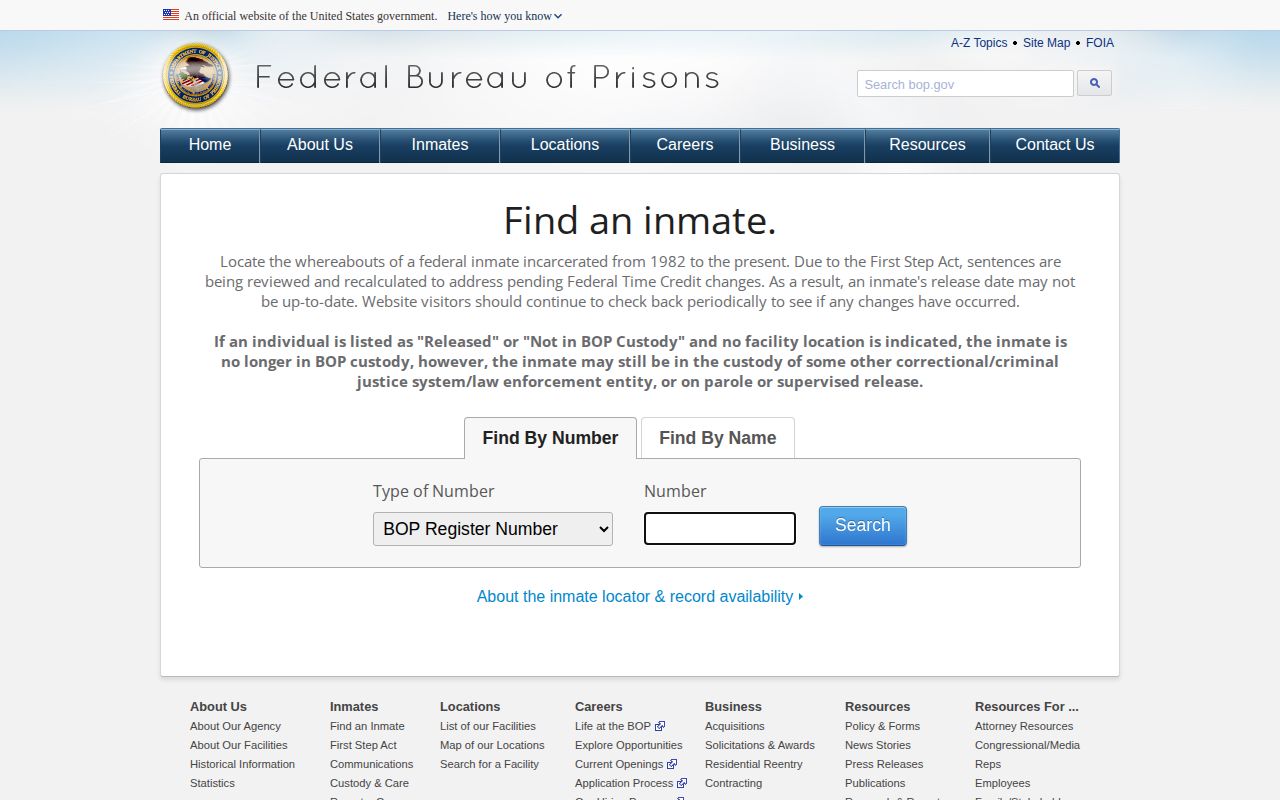
The locator finds custody records, not mugshots. It is not a public photo archive. When neither locator fits, check the federal court docket or ask the arresting agency which office holds the record. Never treat a third-party image page as a substitute for an official custody or court result.
Illinois Busted Site Coverage
Private arrest publishers sit outside Illinois government. Treat them as leads, never as the record itself. Their pages can shift without notice or skip counties. Some blend city and county arrests, or lag behind an official source that has since changed. RecentlyBooked advertises a 30-day recency window with county-by-county sourcing. Its listings do not span all 102 counties, though. The RecentlyBooked Illinois page spells out the operator's own claims about coverage and freshness.
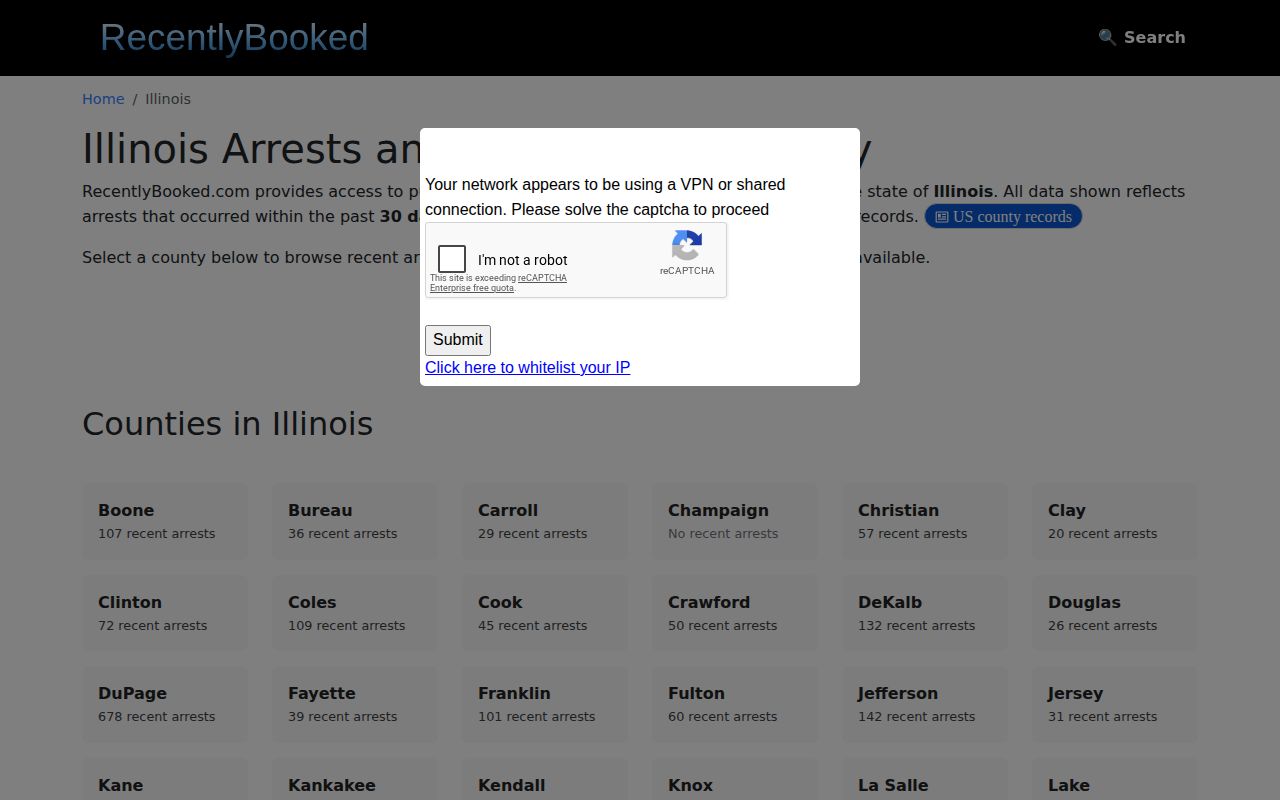
That coverage is a company claim. It is not a verified roster for every county. Competing routes to Illinois arrest photos include Busted Newspaper, Mugshots.com, and Arrests.org. Arrests.org fills in only some county sections. The Mugshots.zone Chicago route stays local rather than statewide. The Mugshots.com Illinois page carries a state label plus its own notice about relying on secondary sources. None of these operators speaks with authority. A listing can trail a release, dismissal, correction, or sealing order.
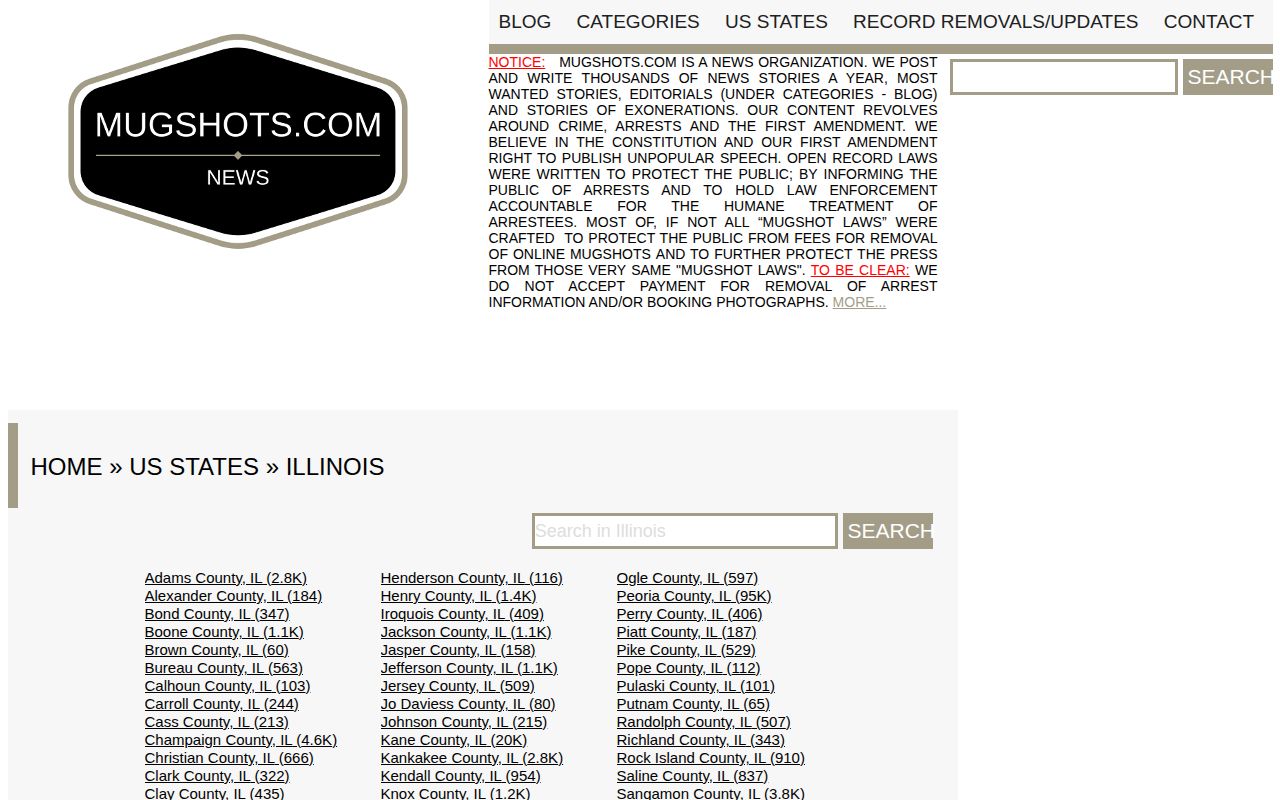
A state heading on an aggregator guarantees nothing. Completeness and currency are separate questions. Start with the official county roster or the records office, then confirm through the court file. A third-party arrest result stays unverified until it matches the source agency and a current docket. Skip copying anyone's face off these pages.