
Famous Illinois Mugshots and Records
Public attention usually lands on the booking photo first. The file behind it tells a longer story. A case may end with a dismissal, a reversal, or a rewritten sentence, and that final result is called the disposition. The eight cases below all have a real source. Each offers a path to the original record. It is not a gallery or a tool for reading a current arrest. The right starting point depends on where the case lived. Federal files may sit with a federal court or the National Archives. Illinois records usually rest with a circuit clerk, a police custodian, or an appellate court. A modern search portal can locate a docket fast. It can't prove an old booking image survives. Charges and final outcomes appear separately in each entry below.
Notable Illinois Arrest Records
This index splits the arrest from the outcome. It also names the record custodian. "Record year" marks the documented event or cited court record whenever no separate arrest date exists.
| Case and record year | Arrest or charge | Agency or court | Disposition | Original record path |
|---|---|---|---|---|
| Al Capone, 1931 verdict | Federal income-tax offenses | U.S. District Court, Northern District of Illinois | Convicted in 1931 and sentenced to 11 years | NARA Chicago, Record Group 21 criminal case files |
| Richard Speck, 1966 case | Chicago arrest; eight murder indictments | Chicago Police; Cook County case transferred for Peoria County trial | Convicted on all eight counts; death sentence affirmed in 1968, later changed | Cook County and Peoria County files, then Illinois appellate record |
| John Wayne Gacy, 1984 opinion | Cook County indictments for 33 murders and related offenses | Cook County Circuit Court; Illinois appellate courts | Convictions and death sentence, followed by post-conviction review | Cook County case file and state court opinions |
| Jon Burge, 2008 arrest | Federal obstruction and perjury charges after Florida arrest | Federal prosecution in the Northern District of Illinois | Convicted in 2010; sentenced in 2011 to 54 months | Federal indictment, docket, and Justice Department releases |
| Rod Blagojevich, 2008 arrest | Federal corruption charges | Federal prosecution in the Northern District of Illinois | Received a 14-year sentence; remaining term commuted in 2020 | Federal complaint, indictment, sentence, and clemency action |
| Drew Peterson, 2009 arrest | Murder prosecution for Kathleen Savio's death | Will County Circuit Court and arresting agency | First-degree murder conviction and 38-year sentence affirmed | Will County court and sheriff records, plus appellate opinion |
| Jussie Smollett, 2019 arrest | Chicago Police arrest on false-reporting charges | Chicago Police; Cook County prosecution; Illinois Supreme Court | Later conviction reversed; judgment of dismissal ordered | CPD record, Cook County docket, and Supreme Court opinion |
| Leopold and Loeb, 1924 case | Cook County murder and kidnapping prosecution | Cook County court | Guilty pleas; life sentences for murder plus 99 years for kidnapping | Cook County file and Newberry Library archival collection |
Illinois Capone, Speck, and Gacy Records
Al Capone's federal case played out in the Northern District of Illinois. The charges were federal income-tax offenses. A 1931 conviction brought an 11-year sentence. The National Archives holds the consolidated case files in Record Group 21. It also preserves a digitized verdict. That result covers the tax case alone. Richard Speck's case began with a 1966 Chicago arrest. Cook County returned eight murder indictments, and the prosecution moved to Peoria County. A jury convicted him on all eight counts. In 1968 the Illinois Supreme Court affirmed the convictions and death sentence on direct review. Later legal action changed the sentence. The paper trail runs from Cook County charging papers to the Peoria trial. Appellate orders follow after that. John Wayne Gacy faced Cook County indictments for 33 murders and related offenses. Illinois Supreme Court opinions document his convictions, his death sentence, and later review. A post-conviction opinion covers a later stage. The original path runs through the Cook County Circuit Court file. Appellate opinions and Des Plaines-area law-enforcement records fill out the trail. For today's Cook County cases, use the Clerk's case-search portal.
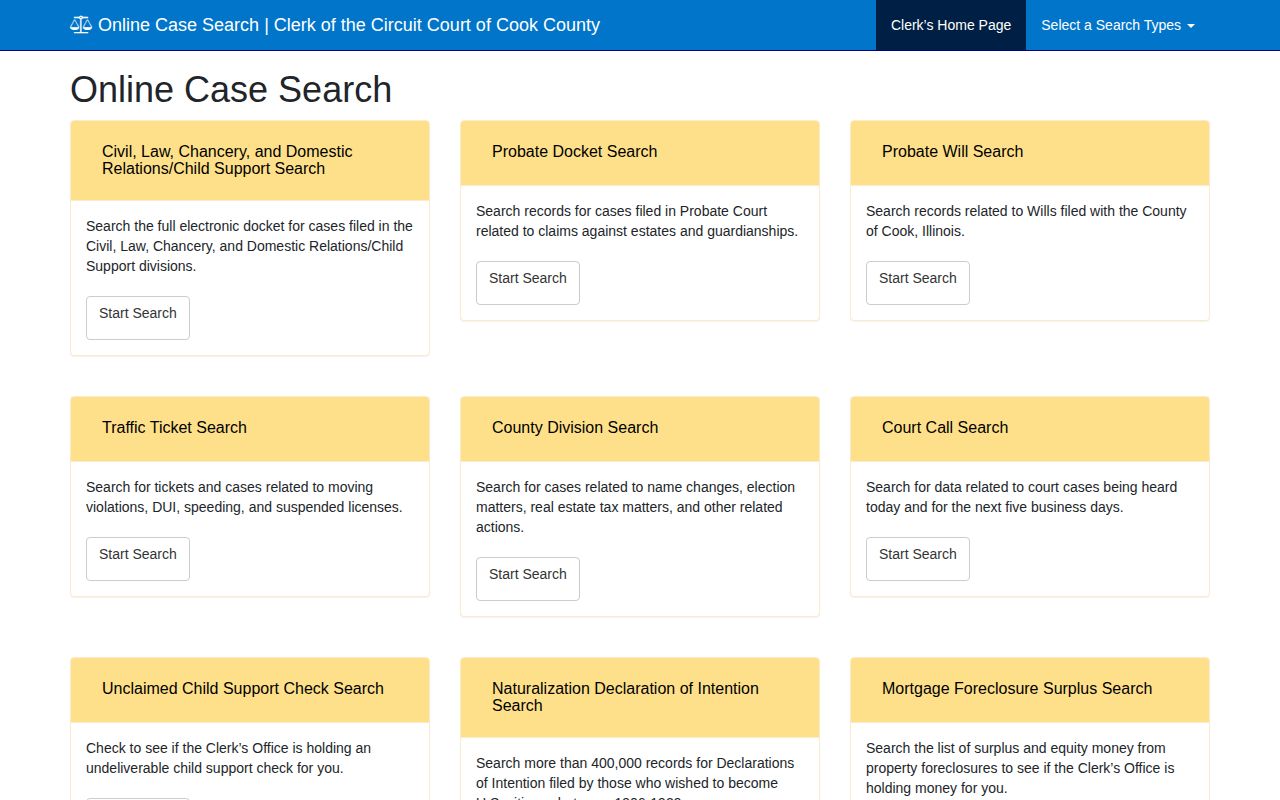
That docket interface covers current Cook County filings. It is not an archive of old booking photos. Ask the clerk or the original agency about such records, their source, and any reuse terms. Note: A modern case portal can point to a custodian, but it cannot confirm that a historic image still sits in that office's files.
Illinois Burge and Blagojevich Records
Jon Burge was arrested in Florida in 2008. Federal prosecutors charged him with obstruction and perjury over statements made in civil litigation. The Justice Department later reported a 2010 conviction. His 2011 sentence ran 54 months. Because the arrest happened in Florida, an Illinois county roster is not the source for an original booking image. Trace the case through the federal indictment, the Northern District of Illinois docket, and Justice Department records. Rod Blagojevich was arrested on federal corruption charges in 2008 while serving as Illinois governor. His case ran through the Northern District of Illinois. A 2011 release from the case records a sentence of 14 years. In 2020 the remaining term was commuted. A commutation is not an erasure. It changes the sentence while leaving the conviction itself standing. The Justice Department's Burge sentencing record documents the later disposition in that case. The archived clemency statement documents Blagojevich's commutation. Neither case was a Cook County booking. Public roles in Illinois do not make it one. Note: A federal arrest can have an out-of-state booking custodian even when the prosecution and public interest center on Illinois.
Illinois Peterson Court Record
Drew Peterson was arrested in Will County in 2009. A jury later tried him for first-degree murder in the death of Kathleen Savio. It convicted him. The court imposed a 38-year sentence. The Illinois Supreme Court affirmed both. That opinion is the authoritative record here. The Will County Sheriff's current inquiry offers an official search route today. Even so, don't assume it holds a booking photo from 2009.
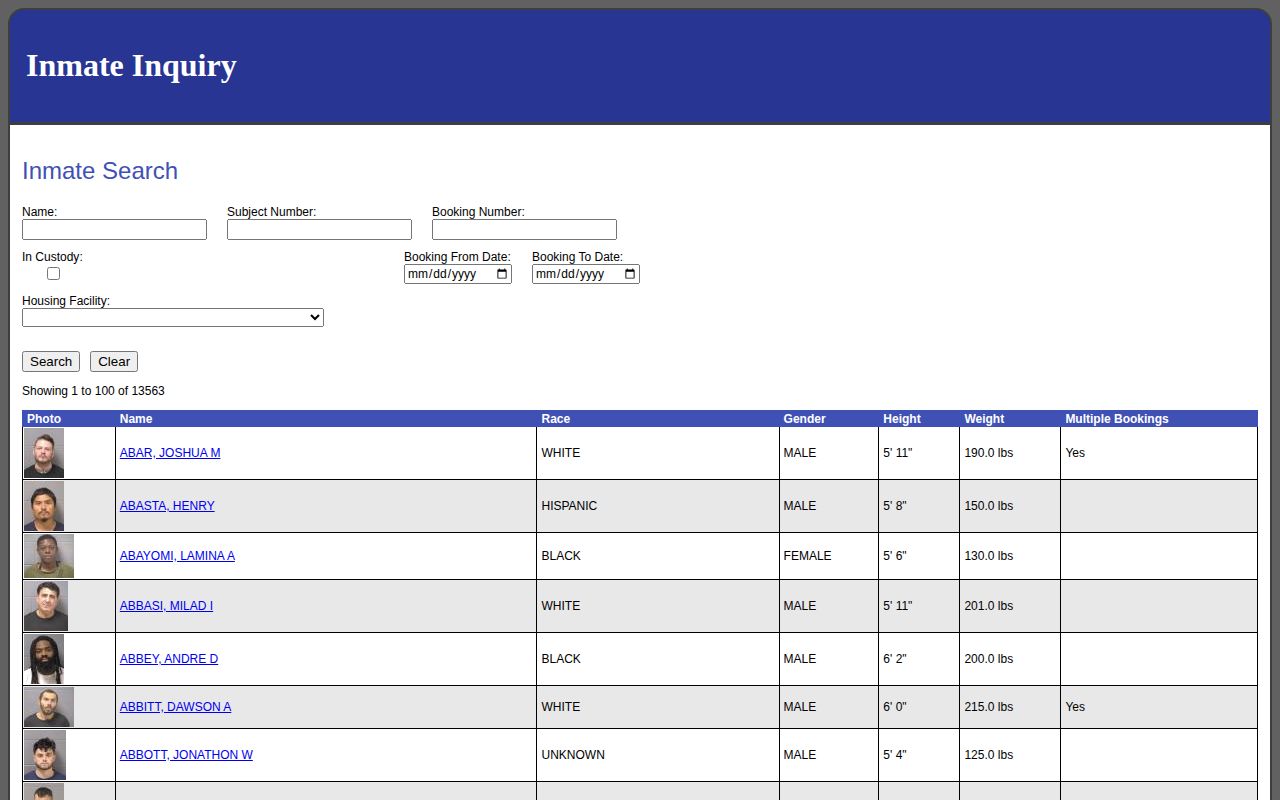
The portal's search fields won't confirm a historical image. Ask the sheriff or circuit clerk about the older case. Then verify the outcome in the appellate file.
Illinois Smollett Dismissal Record
Chicago Police arrested Jussie Smollett in February 2019 on false-reporting charges. The first prosecution ended in a nolle prosequi. That filing is a formal notice the state won't proceed. It came with an agreement. A later prosecution produced a conviction. But in 2024 the Illinois Supreme Court reversed it. The court held the second prosecution violated due process. It directed the circuit court to enter a judgment of dismissal. That 2024 ruling is the final point in this case history. The Chicago Police arrest-record search covers CPD records only. It is a police route rather than the full court story.
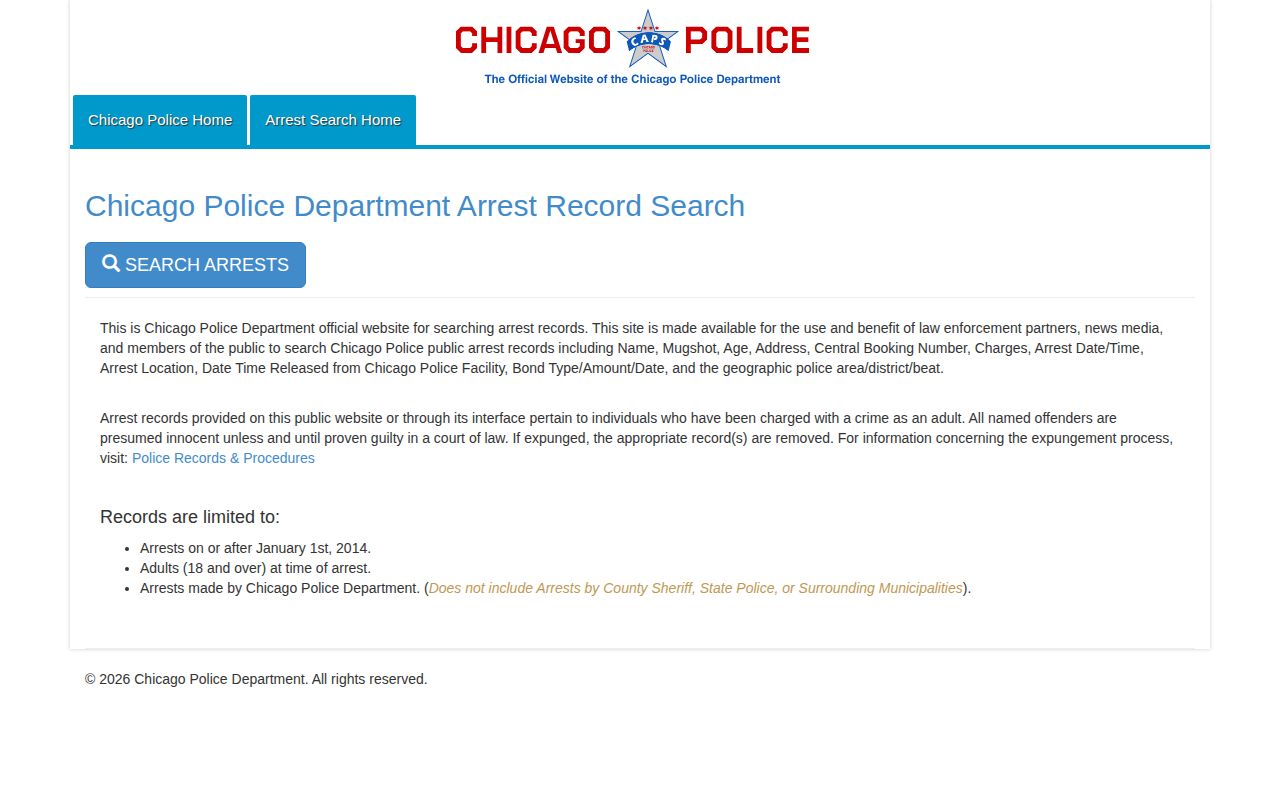
Pair the agency record with the Cook County docket here. Add the Illinois Supreme Court's final opinion. An arrest date alone gives no final disposition. The booking page may still circulate, but the court's last order controls.
Note: The final court order controls the case history. An earlier booking page may still circulate regardless.
Leopold and Loeb Archive Record
Cook County court records and archives document the 1924 Leopold and Loeb prosecution. Both men pleaded guilty. They received life for murder plus 99 years for kidnapping. The Newberry Library describes the case files, transcripts, and exhibits in its holdings. That archival description is the right starting point. Trace any photo to that archive or another named collection. An online label alone proves little. Calling an image a "mugshot" doesn't make it a jail booking photograph. Identify the collection and record series first. Then ask whether a photograph survives among the materials.
Note: An archival description proves a case file exists, not that it contains a booking photograph.
Illinois Court Record Lookup Paths
Pick the record that answers your question first. A roster shows present custody. A police record describes an arrest. A court docket shows the charge and disposition, while an archive holds older files. No single source gives all four. Start by naming the agency and county that handled the arrest or prosecution. The Illinois Courts directory points to each county's circuit court and clerk, a route to the right local holder rather than one statewide docket.
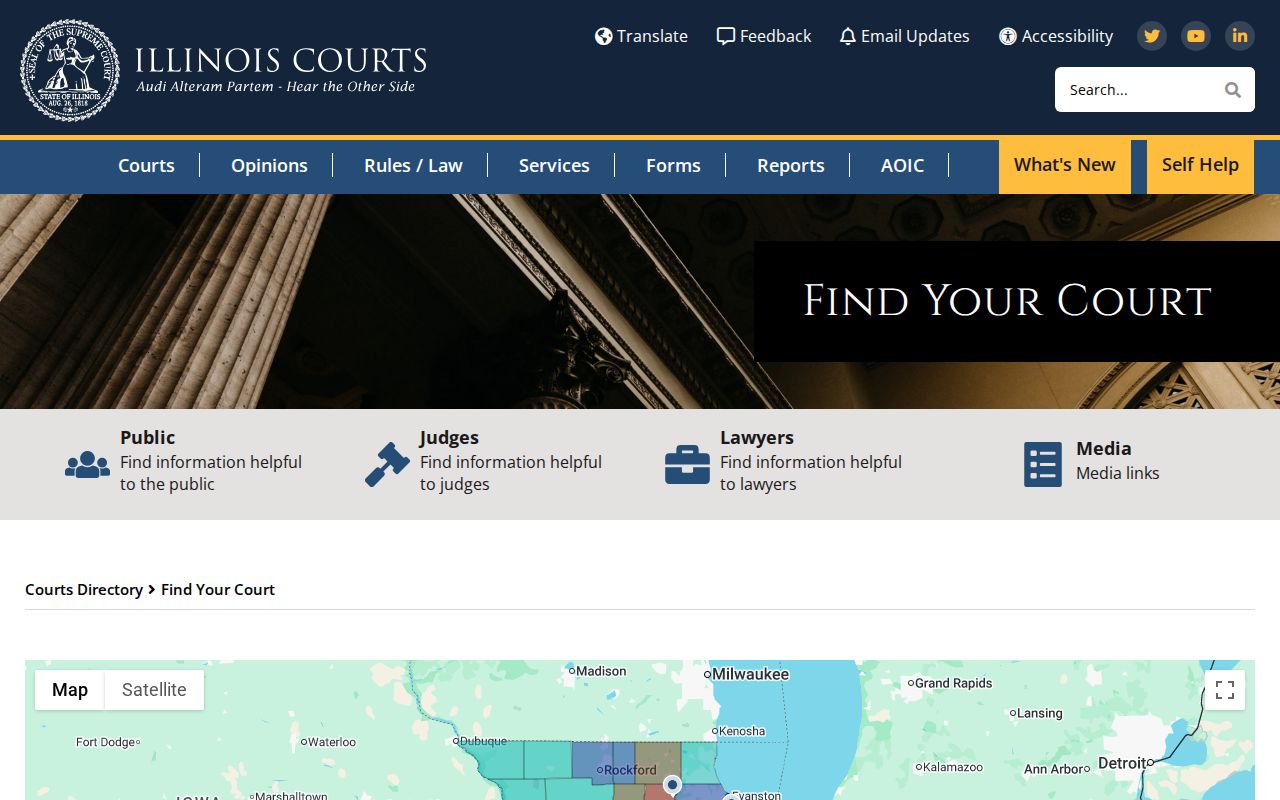
Use the directory to find the right clerk. Then confirm any filing or disposition in that court's own case system.
- Write down the person's full name and any known arrest, booking, or case date.
- For a recent booking, check the official sheriff, jail, or police search for the place of arrest or custody.
- For a charge or outcome, use the circuit clerk's docket. Cook County has a separate clerk search, while other counties may use their own portal or a vendor system.
- If no online record appears, send a focused request to the agency that made or keeps the record. Ask for the arrest report, booking sheet, available photo, charge document, and disposition as separate items.
- For a federal case, use the federal district court and National Archives finding aids. Do not assume a state or county roster holds the federal booking photo.
For county links, use the Illinois County Directory. The Illinois archive guide explains the difference between an archived register and a surviving photo.
Dates, names, and case numbers help a clerk find a file. Those details speed up any file search. A common name needs an arresting agency or county plus a tighter date range. Compare the docket's final entry against any arrest page before repeating the case description. Stay precise and the search moves faster.
Illinois Historical Photo Provenance
Old identification photos resist easy labeling. A web caption rarely settles the question. One image might come from a police file. Another could be a jail register entry. It might also be a court exhibit, a newspaper photo, or a later archive. Ask the holding collection for its catalog description, source agency, date, and any copying limits. If no photo sits in the case file, say so plainly.
For federal Illinois cases, start with the National Archives Chicago branch. Its Record Group 21 finding aids cover district court criminal files. For local cases, ask about the specific series. The circuit clerk, sheriff, police custodian, or local archives can answer. A current roster and an archived paper register may cover different periods. Neither guarantees a photograph survives.
Context also needs the legal endpoint. Record the charge, trial result, appeal, sentence change, or dismissal in separate terms. This order keeps a famous face from replacing the court record it should identify.
Note: A catalog entry describes a collection. The original custodian confirms which images and documents are actually held.