
Illinois Mugshot Records and Public Access
Illinois has no single official mugshot gallery covering every county. A booking photo counts as part of an arrest record. Whether it exists, gets released, or shows up online depends on the agency holding it. The legal limits that apply matter too. The Illinois Freedom of Information Act covers a defined set of arrest records. A photograph makes the list only when one exists. Nothing in the law orders sheriffs or police departments to run a searchable photo feed.
Booking is how the jail logs a person after an arrest. The photo, if taken, is one piece of that record.
A search that comes up empty has several explanations. Maybe no photo was taken. Maybe the agency never posted it, or pulled it from a public roster. A lawful restriction could also block the release. Police, the jail, the court clerk, and corrections each keep their own files. Third-party copies often trail behind them.
Illinois's 72-Hour Access Rule
Section 2.15(a) builds a fast clock. A criminal-justice agency must provide its chronologically kept arrest and criminal-history information. It must do so as soon as practical. The deadline is 72 hours after arrest. That overrides the usual FOIA timing. The listed fields include a person's name, age, and address. Charges, arrest time and place, and the investigating agency are there too. A photo appears only when available. For anyone held in custody, the record also shows receipt, discharge, or transfer times.
That timetable governs access. It does not force web posting. No roster design is required, and no image is promised. For other records, a standard Illinois FOIA request is the separate route. Send it to the public body that holds the material. That body may be the police agency, sheriff, jail, or prosecutor. The Illinois FOIA text and the agency's own records page set out the steps.
The clock has carve-outs. Under Section 2.15(c), an agency can withhold the covered information while a proceeding is pending or contemplated. Disclosure could endanger life or safety. Release could also compromise jail security. Section 2.15(d) keeps the Juvenile Court Act's confidentiality rules intact. So access can turn on the case, the person, the record, and the timing. The fast deadline does not erase those limits. The current text of section 2.15 spells out how they work.
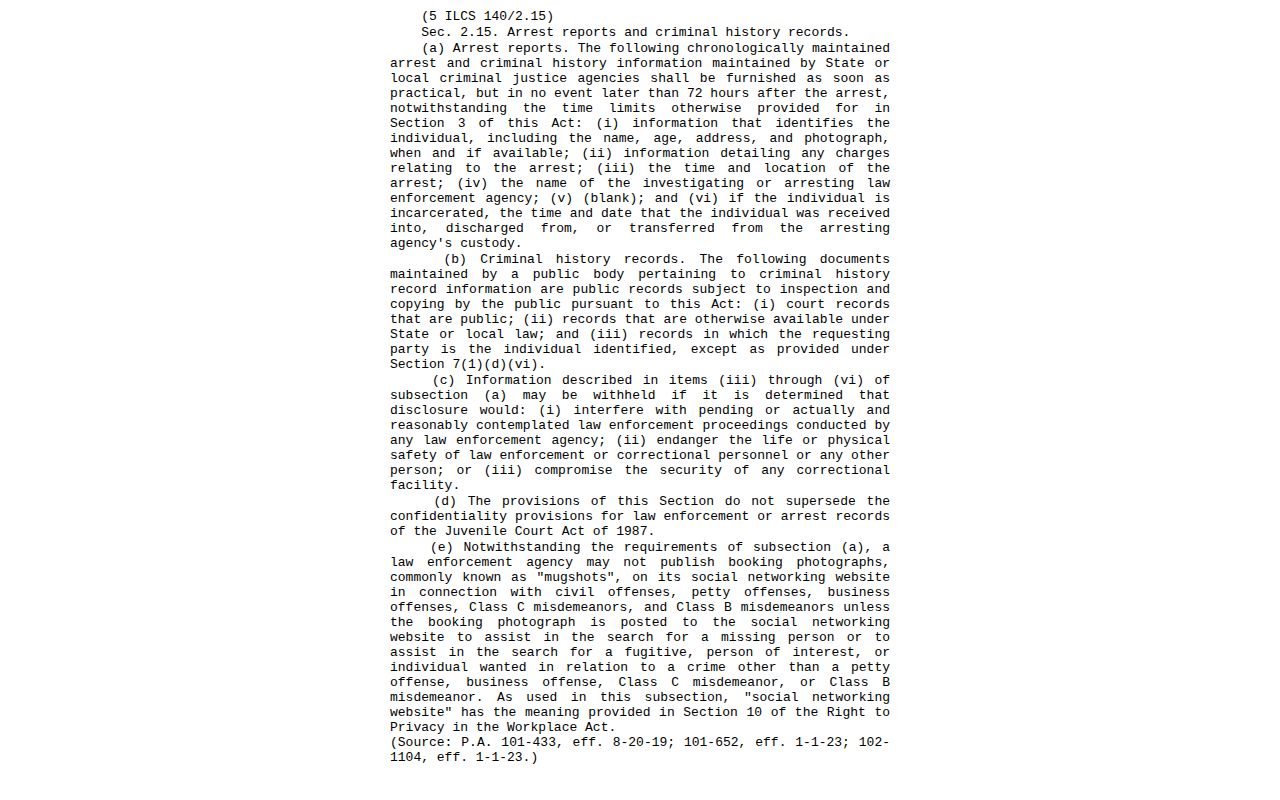
The statute splits access from publication. Getting the listed arrest facts is one thing; seeing a photo online is another. When a roster shows no image, ask the record custodian what exists and which rule shapes the answer.
Illinois Anti-Pay Correction Law
Illinois attacks the mugshot-payout business through section 2QQQ of the Consumer Fraud and Deceptive Business Practices Act. The rule is simple in outline. A person or company that publishes covered criminal-record material in print or online cannot demand money to remove, fix, or change it. Covered material spans arrest and charge data, case dispositions, photographs linked to an arrest, and identifying details. The General Assembly recast this protection in Public Act 100-0927, which took effect January 1, 2019, with related amendments later. The law was not brand new, though. Earlier Illinois statutes had targeted the same conduct, so 2019 stands as a recodification rather than a first move.
A correction procedure rides along with the ban. The affected person sends notice, usually certified mail, with documents backing the fix. The publisher then has five business days. Miss that deadline and the statute treats the failure as an unlawful deceptive practice, opening the door to statutory damages, attorney fees, and related relief. The duty targets errors, though, not an unconditional eraser for accurate material. A request tied to a dismissal, mistaken identity, duplicate entry, or a sealing or expungement order should pin down the exact URL and attach reliable records.
The current section 2QQQ text carves out exceptions too. Art, literary, and audiovisual works stay outside it. So do news media, reporters, internet service providers, consumer-reporting agencies, and interactive computer services hosting material supplied by someone else. Those carve-outs keep the five-day process from being universal.
That structure shapes practical expectations. Publishers inside the statute owe quick corrections. Publishers outside it owe nothing under this particular law.
So the first question for any request is coverage. Only after that does the five-day clock matter.
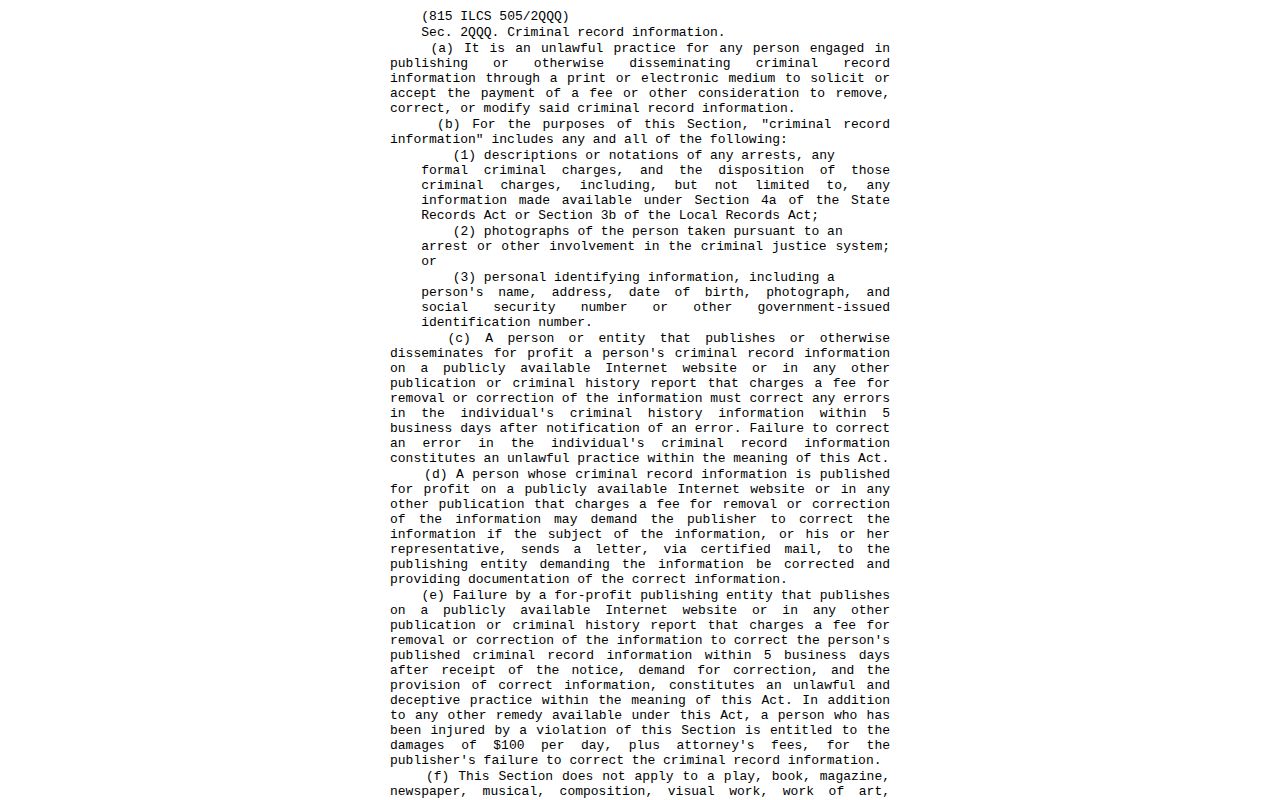
Anyone drafting a correction request should begin with the full statute. Its definitions and exceptions decide whether a publisher is inside the process at all.
Illinois Gabiola Case Record
Gabiola et al. v. Keesee et al. shows the statute in action. The case was filed in the Northern District of Illinois. Plaintiffs claimed mugshot pages came packaged with demands for payment to take information down. The court let the Illinois Mugshots Act and Consumer Fraud Act claims survive the pleading stage. The 2017 federal order is useful for understanding why the correction statute matters.
Keep the ruling in proportion, though. It was a procedural step in one dispute. It did not hand down a blanket order covering every mugshot page. Nor did it create a general right to erase accurate public information. Someone with a changed court outcome still has homework. Identify the source, collect the official disposition or order, and send the correction to each publisher holding a copy.
Note: The procedural ruling covers one dispute and settles neither every publisher's duties nor every request to change accurate material.
Illinois Sealing and Expungement Rules
Expungement and sealing are separate remedies. Expungement generally means eligible records are destroyed or returned. The name then drops from official indexes. Sealing works differently. It limits public access but keeps the record alive for certain justice-system and authorized uses. Eligibility hinges on the outcome, the offense, the sentence, the waiting period, and later history. Common expungement paths include arrests that never became charges. Dismissed or nolle-prossed charges also qualify, along with acquittals, not-guilty findings, and reversed or vacated convictions, all subject to exceptions. Some supervision records open up after a wait often described as two years. Many convictions barred from expungement may still be sealed. This commonly happens after three years past sentence completion. Offense-specific rules can shift those examples, so a charge label alone proves little.
Juvenile matters run on their own track. Illinois also maintains targeted automatic and petition-based paths for certain cannabis records. Once a court signs an order, the circuit clerk receives it. The arresting, booking, and prosecuting agencies receive it too, through the applicable process. A stray copy can still survive elsewhere. A news outlet, aggregator, archive, screenshot, or search index may keep one. The order fixes the covered government record. It does not guarantee every copy vanishes.
The current expungement and sealing statute builds the eligibility framework. A signed order plus each agency's holdings decide what actually changes.
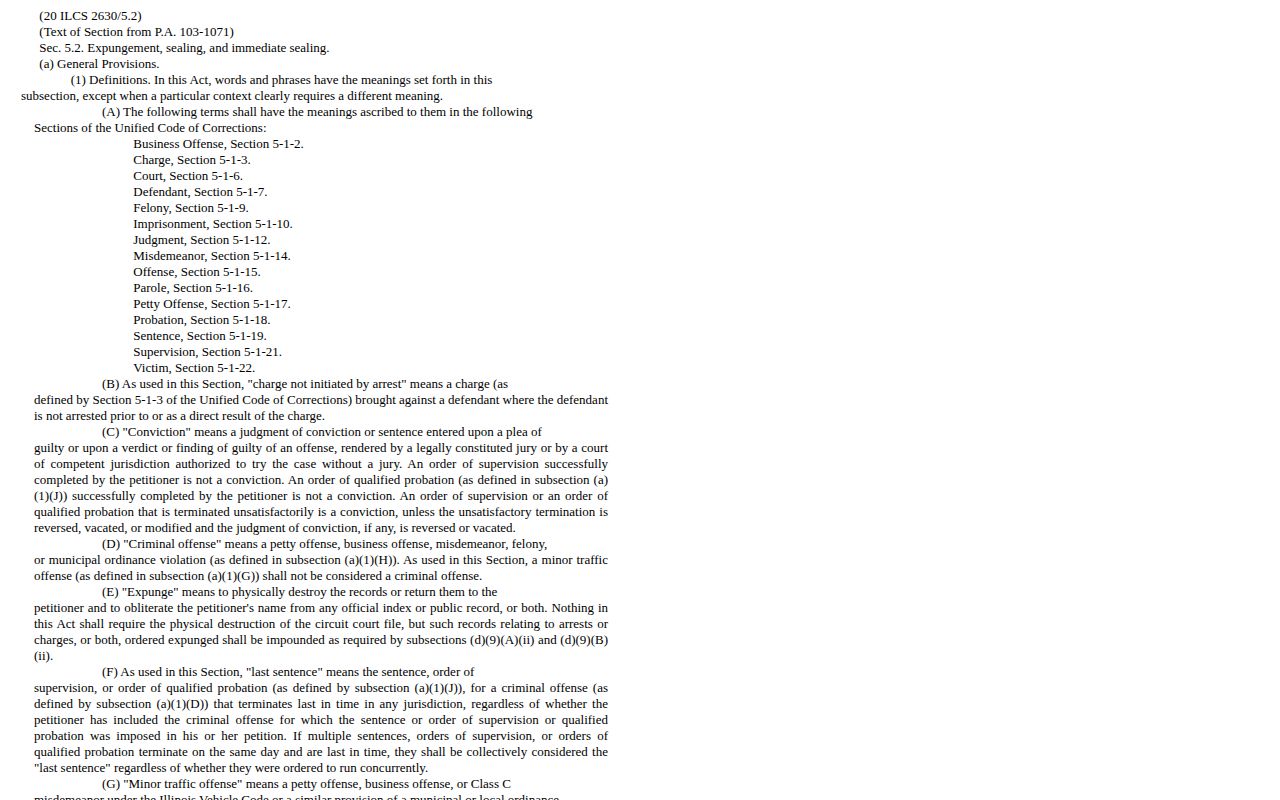
The statute draws the route. The disposition and each custodian's records decide whether a given file qualifies.
Illinois OSAD Expungement Guide
The Office of the State Appellate Defender guide is a solid starting point. It walks through the sealing-versus-expungement distinction and sketches the current process.
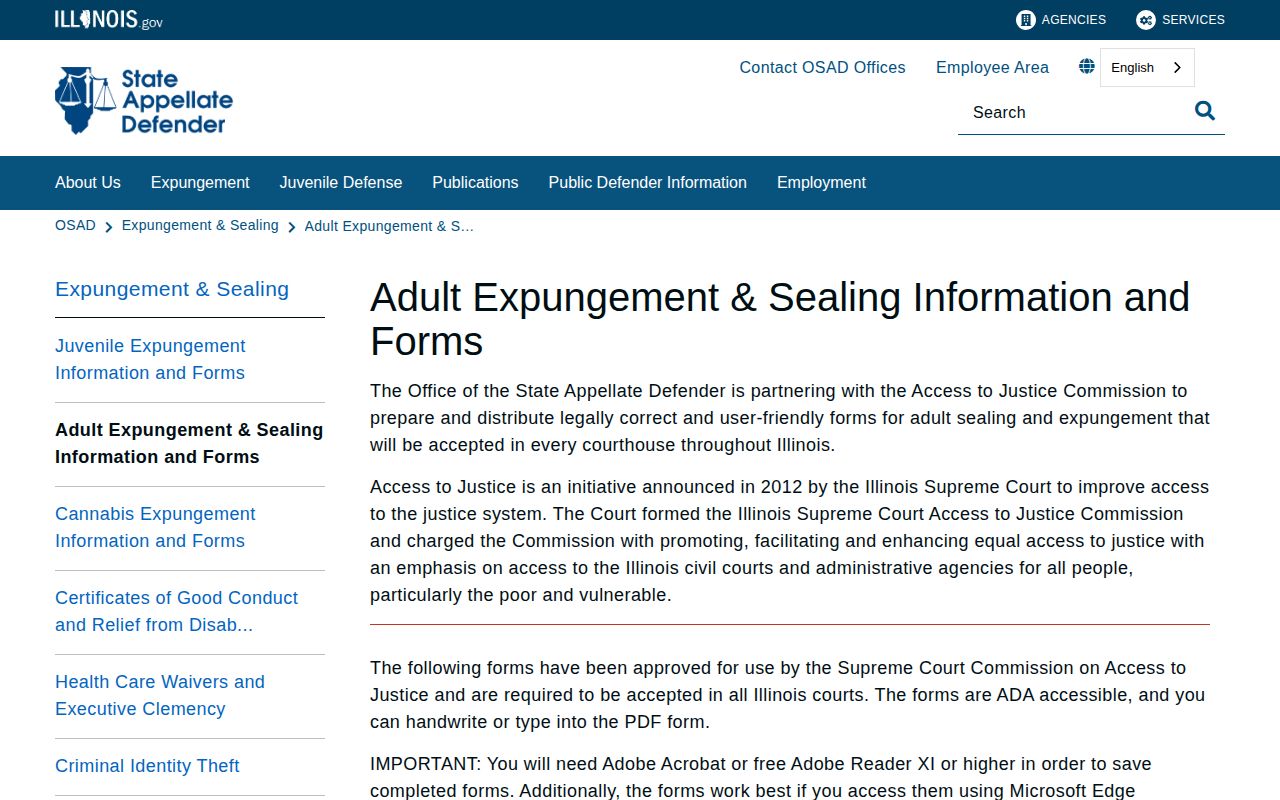
Treat the guide as an entry point. Then read the statute. Then weigh the case's outcome before choosing a petition.
Note: Eligibility turns on the exact case and statute, so general time frames never guarantee that a particular record can be cleared.
Illinois Expungement Court Forms
The Illinois Courts forms page identifies the current petition forms and filing materials.
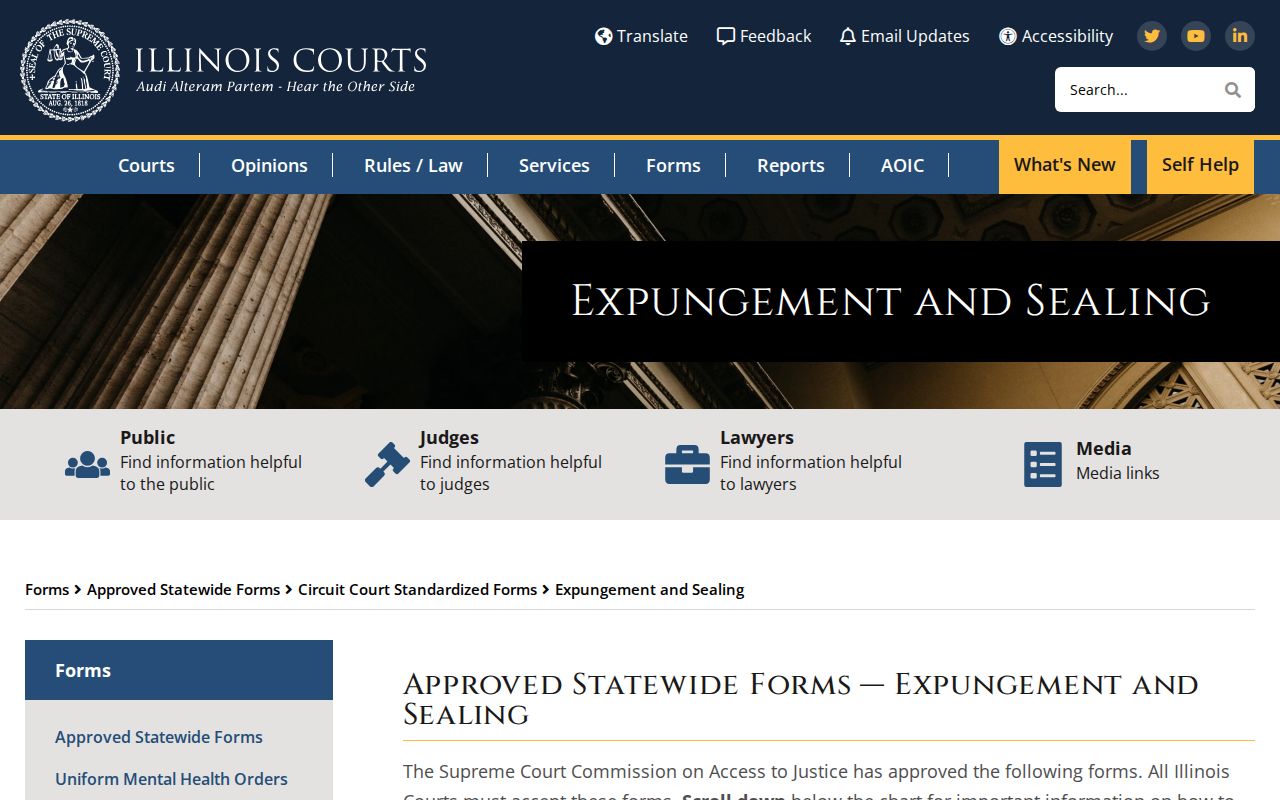
Read the current instructions first. Then ask the circuit clerk, legal aid, or an attorney which filing route fits the case. Skip any copied packet that may have expired.
Illinois Mugshot Record Search Paths
Track the event through the agency that created each piece of the record. Start there. The arresting police department or sheriff comes first. The booking jail follows, and it may hold a booking sheet or image. Give the person's name and the approximate arrest date. Add the agency and any case or booking number you know. Name each item you want. That list can include the arrest report, booking sheet, and photograph if disclosable. It can also cover the charge document, the release or transfer entry, and the final disposition. Be specific. A narrow request routes faster than a demand for every record on file.
- Identify the arresting agency and likely booking custodian from the event details.
- Check the agency's official roster or arrest search, if it has one, and note the date and record number.
- Send a written Illinois FOIA request to the body that holds any missing record. Ask for a fee estimate if copying may cost money.
- Search the court clerk's case docket for charges and disposition, which may differ from the initial booking label.
Illinois has no single statewide court screen holding every case. The Illinois Courts directory helps you find the right circuit and clerk; Cook County runs a separate clerk search, and Judici covers only participating counties. A court portal can show a filing or an outcome while holding no booking photo at all. For a sentenced state-prison record, the IDOC offender-photo guide walks through that separate corrections search. The statewide record-finding guide maps county roster and request paths. Each layer answers a different question. A jail roster reflects custody at the moment shown. A court file tracks a case, while a corrections profile covers state custody. No single layer adds up to a complete legal history.
Illinois Free Correction Routes
When an official record changes, contact the source agency first. Ask it to update or withdraw its public page. Then approach each publisher still showing a stale copy. Keep the request free, specific, and backed by the court order or other supporting record. Identify the URL. Explain the problem: wrong person, duplicate, changed disposition, or a sealing or expungement order. Keep a copy of everything you send. The state rule can reach covered publishers, though its exclusions and the facts still matter. Several secondary publishers post free correction processes. Busted Newspaper's remove-a-listing process asks for the listing URL, verification, a reason, and supporting documentation. RecentlyBooked's policy lists categories such as wrong person, juvenile entry, duplicate, dismissal, sealing, expungement, or error. Its Illinois county coverage is not complete. Its stated time window is the operator's own claim. RecentlyBooked also posts a page describing the records it says it reviews.
Read a publisher's current policy before mailing sensitive documents. Share only what the correction needs. Mugshots.com's record-maintenance policy lists documentation-based update categories. A Chicago-area Mugshots.zone form describes free review with documents, though it offers no stable statewide Illinois route. Arrests.org's Illinois pages list no dedicated free opt-out. The contact page is an inquiry route, not a removal promise. News publishers handle these matters through story-level editorial contacts. Treat all of these as secondary sources. They may lag behind the court docket or agency record. Skip anyone promising to erase every copy or guarantee a result for a fee. Check the written policy and share only the records the correction requires.
Illinois Stale Search Results
A search engine can keep serving an old result after the source page changes. Google's Refresh Outdated Content tool can refresh a stale search result. It does not touch the agency record or delete the publisher's page. A result can also vanish from the index. That does not prove the record was sealed or expunged. Confirm any change with the custodian and the court. Never rely on a snippet, or its absence, alone.
Illinois Booking Photo Retention
Illinois sets no single statewide public-photo retention period. A county web roster, a vendor page, a paper jail register, and an internal image file are distinct records. Each has its own display and retention rules. A photo aged off a roster may still sit with the custodian. An agency may also lawfully destroy a nonpermanent record under its approved schedule. So "not online" does not mean destroyed. An archived register does not mean a photo was kept. State corrections records form a separate layer. IDOC says current in-custody photographs can appear through its official search. Photographs of former individuals in custody are confidential under Illinois law. That policy binds no county jail. For an old county or federal record, ask the sheriff, court, prison, or archive. Request the right record series and date range. The original custodian knows best whether an image exists and may be released. A sealing or expungement order can reach official booking material. Its scope depends on the order and the custodian. Send it to each relevant public agency. Then make a separate documented request to any publisher holding a copy. Keep the final court disposition with the record trail. Later readers can then tell an arrest from the case result. Note: A record missing from the internet may still exist in a custodian's files or a separate archive.
Illinois Booking Photos on Social Media
Section 2.15(e) targets a narrower problem. That problem is an agency posting booking photos on social media. It bars that practice for certain cases. Those are civil, petty, business, Class C misdemeanor, and Class B misdemeanor cases. The exception covers posts meant to locate certain people. Those include a missing person, a fugitive, a person of interest, or someone wanted for a more serious crime. Those categories matter. The section is not a flat ban on photo release. It also grants no universal right to obtain an image.
The rule reaches agency posts on social-networking sites. It does not order every agency roster to strip its booking images. It also does not automatically cover a newspaper story or a copy a private person uploads. The current text reflects Public Acts 101-433, 101-652, and 102-1104. Go to the actual record and its custodian. Do not guess at a blanket rule from one social post.
Note: This narrow rule covers agency posts on social-networking sites, not every public booking-photo record or ordinary roster.